An Army in Clay
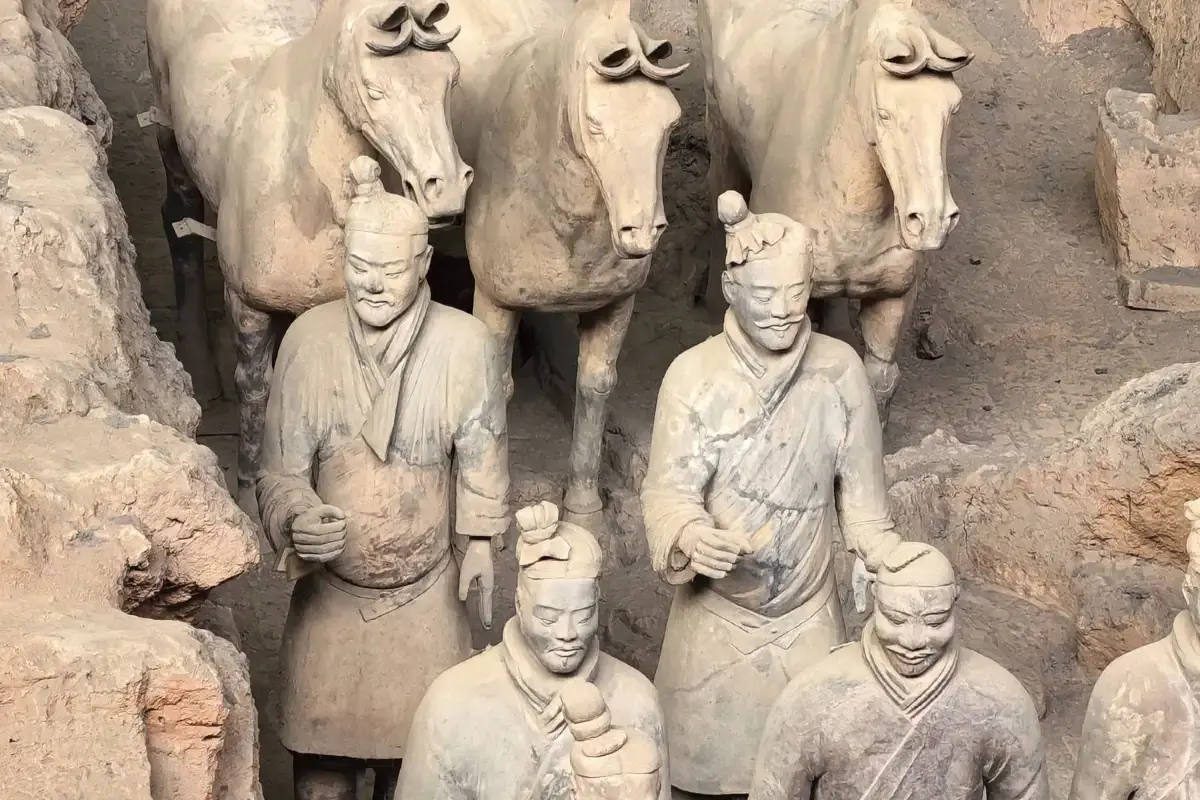
More than a thousand life-size soldiers unearthed so far — every face different, from generals to kneeling archers — guarding a tomb started when the First Emperor was 13 and finished by nearly 720,000 workers over 38 years.
秦始皇帝陵博物院(兵马俑)
The story of the Terracotta Army — the buried legion of China's First Emperor, a UNESCO World Heritage necropolis since 1987 — and of this independent English-language guide.
Who we are
This site is run by a small editorial team of China-based travel writers who have walked the pits of Lintong in every season — in summer heat above 37°C, in autumn's crisp light and in winter when the hangars belong to you alone. We built this English-language guide because one of the world's greatest archaeological sites deserved more than a translated brochure: travelers deserve to know what a ticket really includes, how the free shuttle to the mausoleum works, and which hour of the day turns a crowded hangar into a private audience with the First Emperor.
Every page blends first-hand visits with the museum's official announcements and hundreds of verified Trip.com traveler reports, and each fact is re-checked before publishing. When something can change — seasonal hours, ticket quotas, shuttle times — we say so plainly and point you to the official ticket hotline rather than guessing.
What this place stands for
The Terracotta Army is more than a photo stop — it is a monument built around four ideas.
More than a thousand life-size soldiers unearthed so far — every face different, from generals to kneeling archers — guarding a tomb started when the First Emperor was 13 and finished by nearly 720,000 workers over 38 years.
The Mausoleum of the First Qin Emperor was inscribed on the UNESCO World Heritage list in 1987 — pits, bronze chariots and the unexcavated mound protected as one necropolis.
Warriors were assembled in modular parts and finished by hand, then painted in brilliant lacquers — including the famous "Chinese purple" — a production line from 2,200 years ago you can still read on every face.
One ticket, two sites, 3–5 hours: the three pits museum, then a free shuttle west to the mausoleum mound and the Bronze Chariot Hall — rated 4.7/5 by more than 149,000 travelers.
Location
The museum sits in Lintong District, about 35 kilometers east of downtown Xi'an, Shaanxi — 1.5 kilometers east of the mausoleum mound itself, at the foot of Mount Li. Most visitors come out from Xi'an by bus, metro or a booked day tour and are at the gate in under an hour and a half.
The sights
Six headline moments — each one 2,200 years in the making.
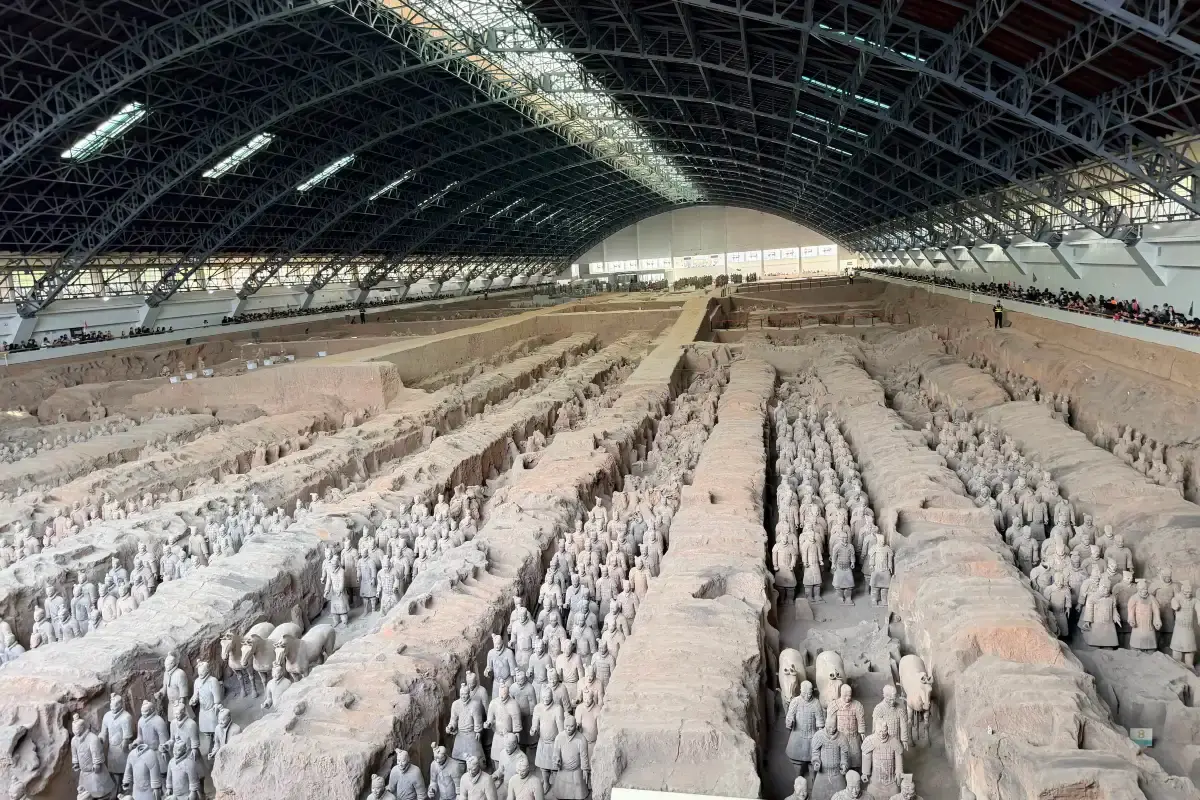
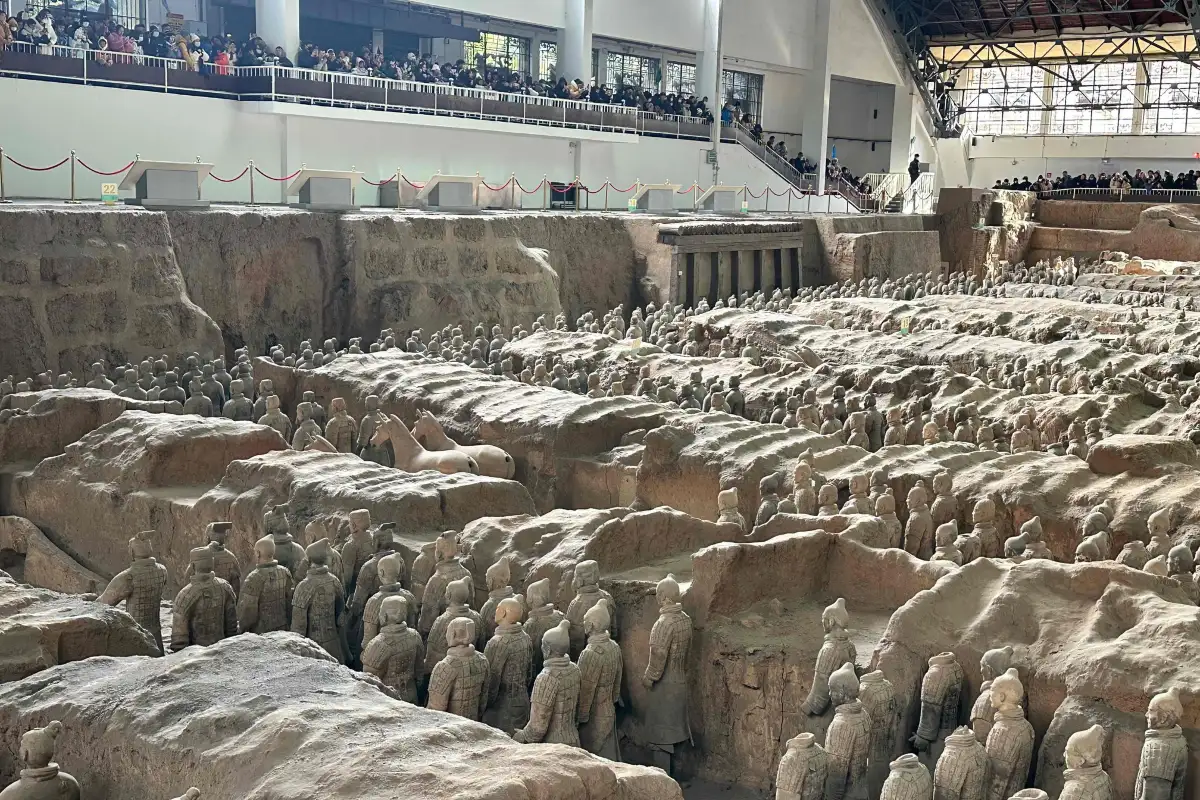
The first-step view: about 6,000 warriors and horses in battle formation inside a 230-by-62-metre vaulted hangar.
Walk the raised corridors for close-ups — no two faces alike, every topknot and armor plate finished by hand.
Pit Two's glass-case icon — half-crouched, palms and shoe treads still crisp after twenty-two centuries underground.
Two half-size chariot-and-horse teams of gold and silver inlay, unearthed in 1980 — the "Crown of Ancient Bronzes".
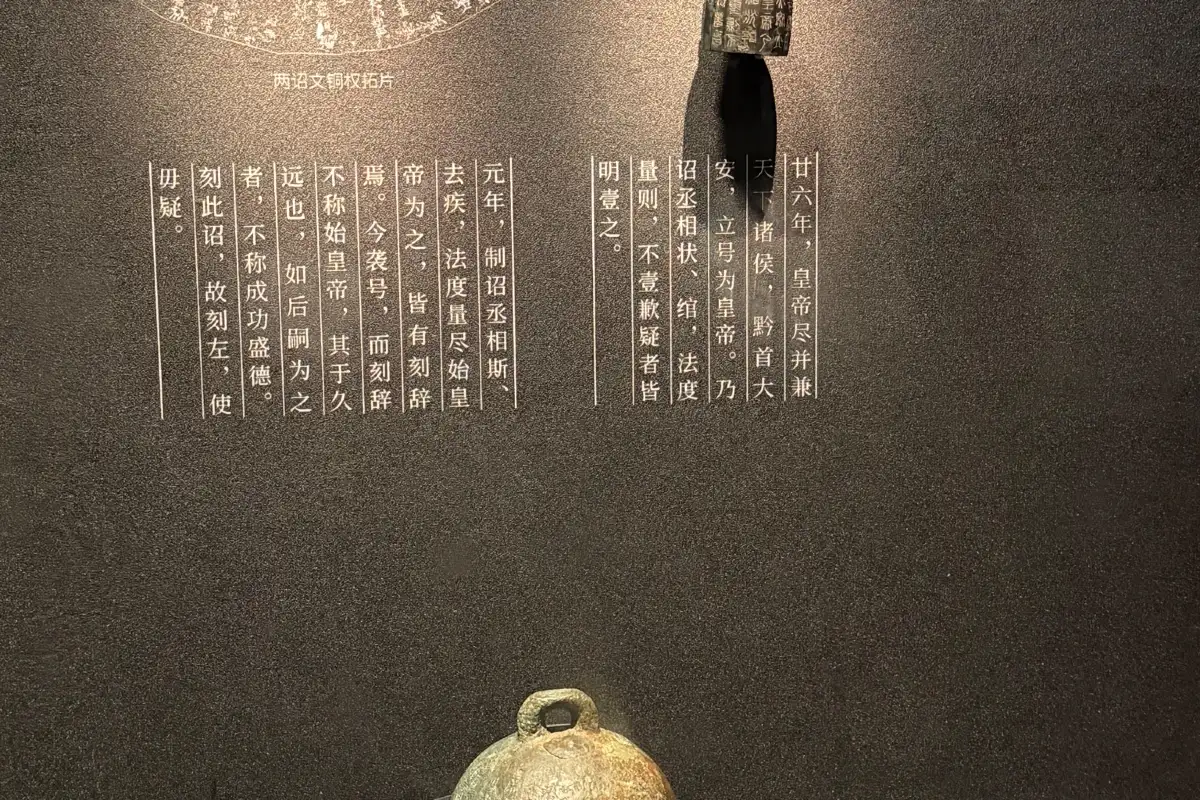
Officers, a scarred war chariot and the meeting room — the brain of an army that never marched.
The emperor's own grassy pyramid — unexcavated, mercury-touched and closed to the world — seen from the necropolis paths.
The army in numbers
Our promise
This website is an independent, English-language guide for international travelers planning a visit to Xi'an Terracotta Warriors. We are not the official museum: our job is to turn the necropolis's practical information into one clear, current and honest resource — what a ticket actually includes, how the shuttle between the pits and the mausoleum works, when the crowds surge, and what real travelers wish they had known before arriving.
When details can change — seasonal hours, ticket quotas, shuttle times — we say so plainly and point you to the official ticket hotline rather than guessing. That honesty is the whole point: an army this vast rewards good planning.
 English English
 Chinese (China)
 Chinese (Hong Kong)
 Chinese (Taiwan)
 Russian
 Korean
 Japanese
 Thai
 German
 Spanish
 French
 Italian
 Portuguese