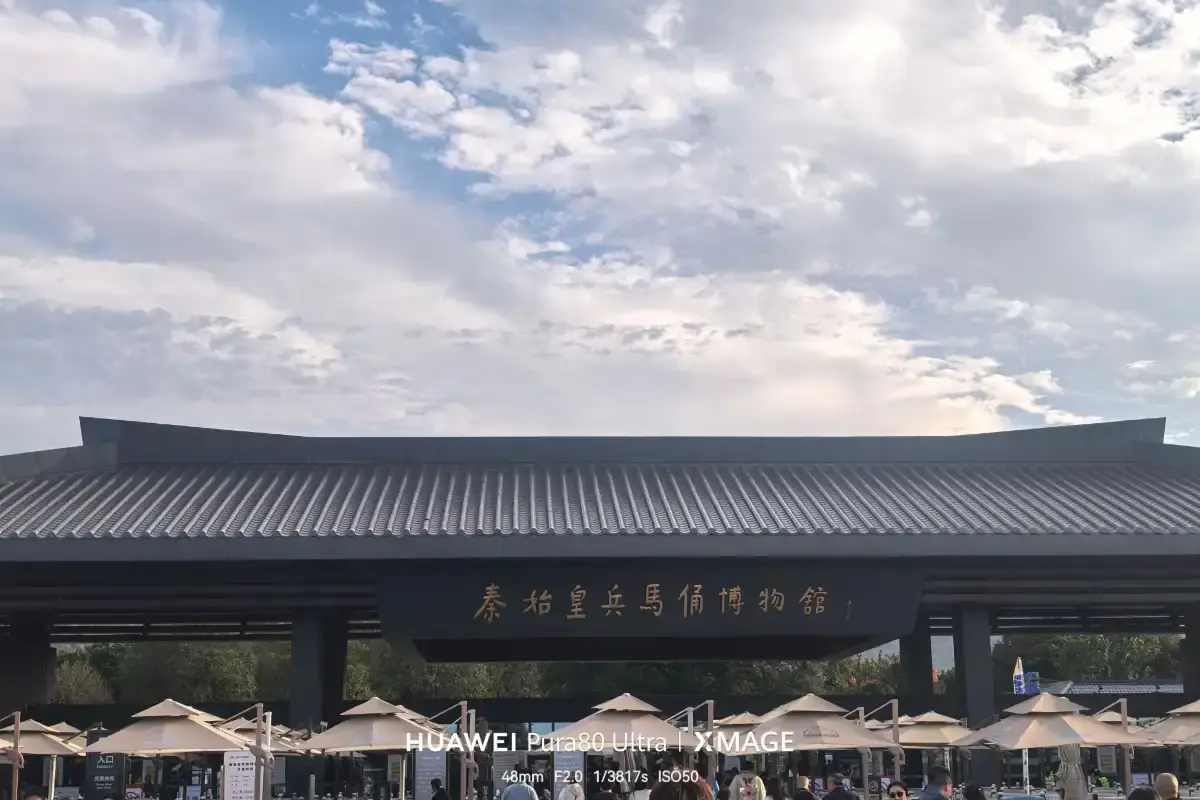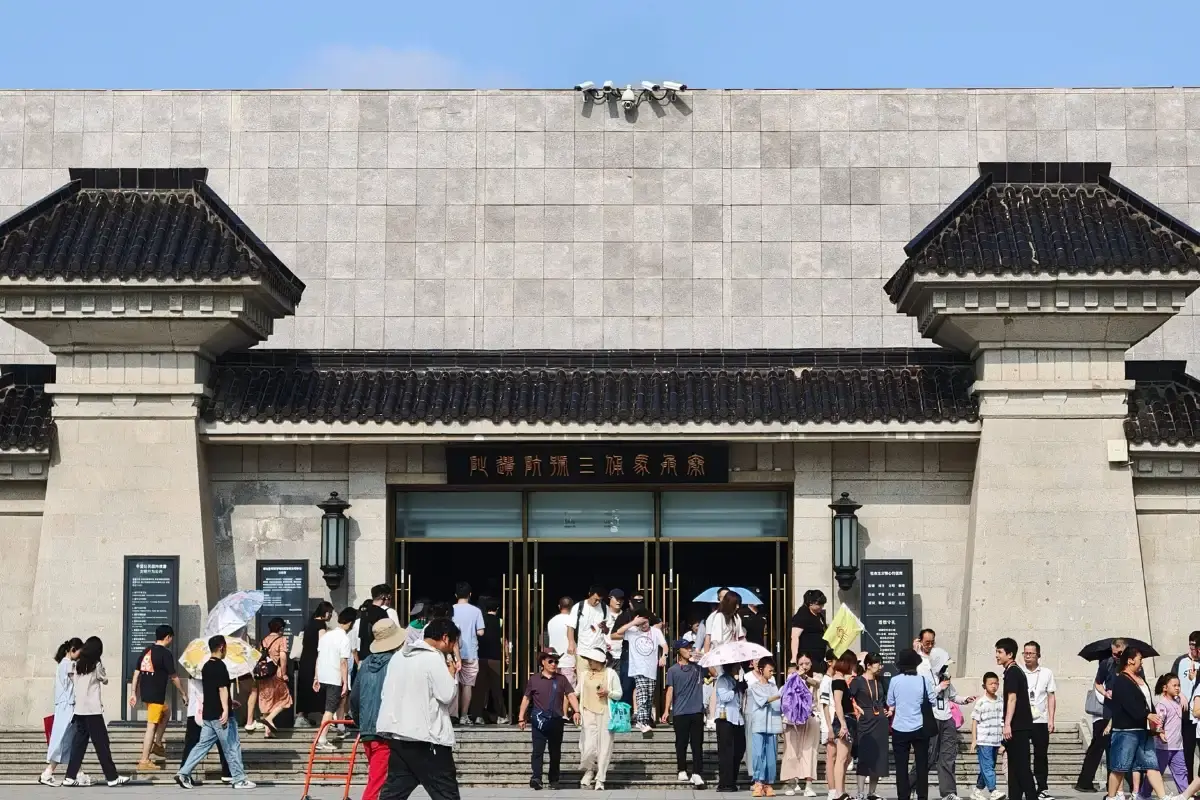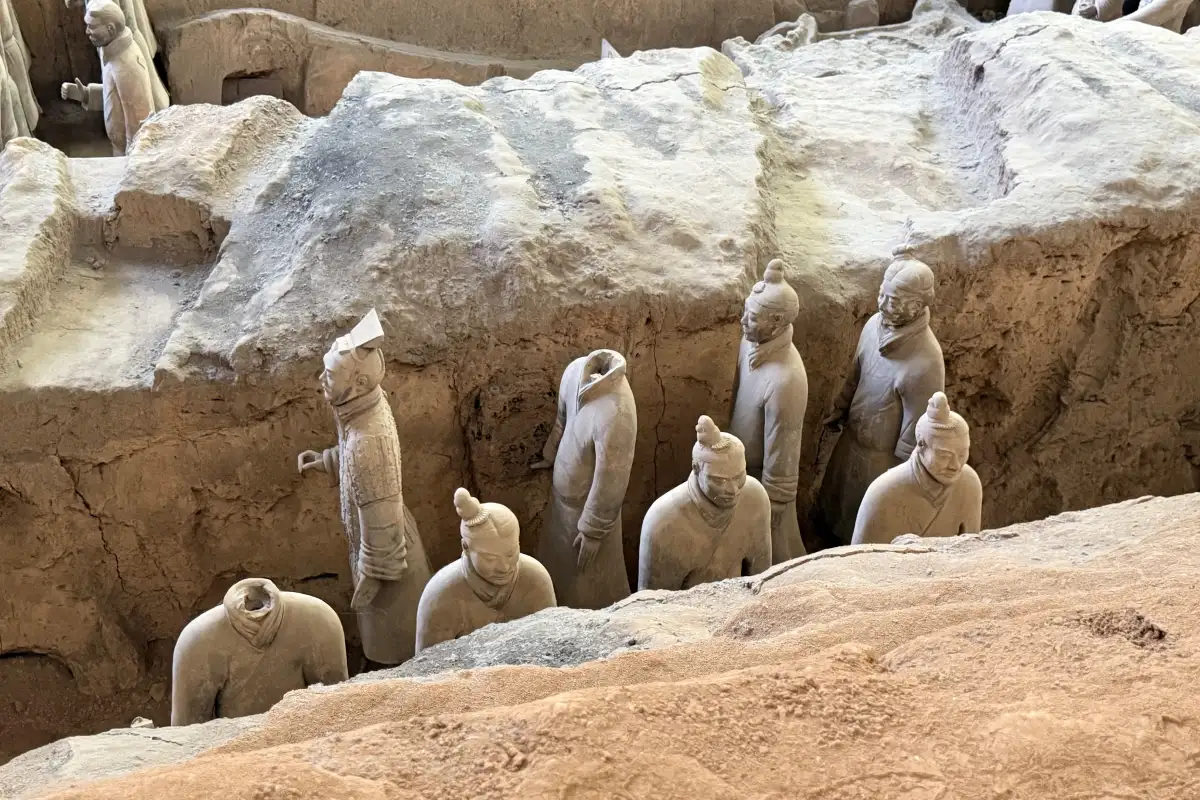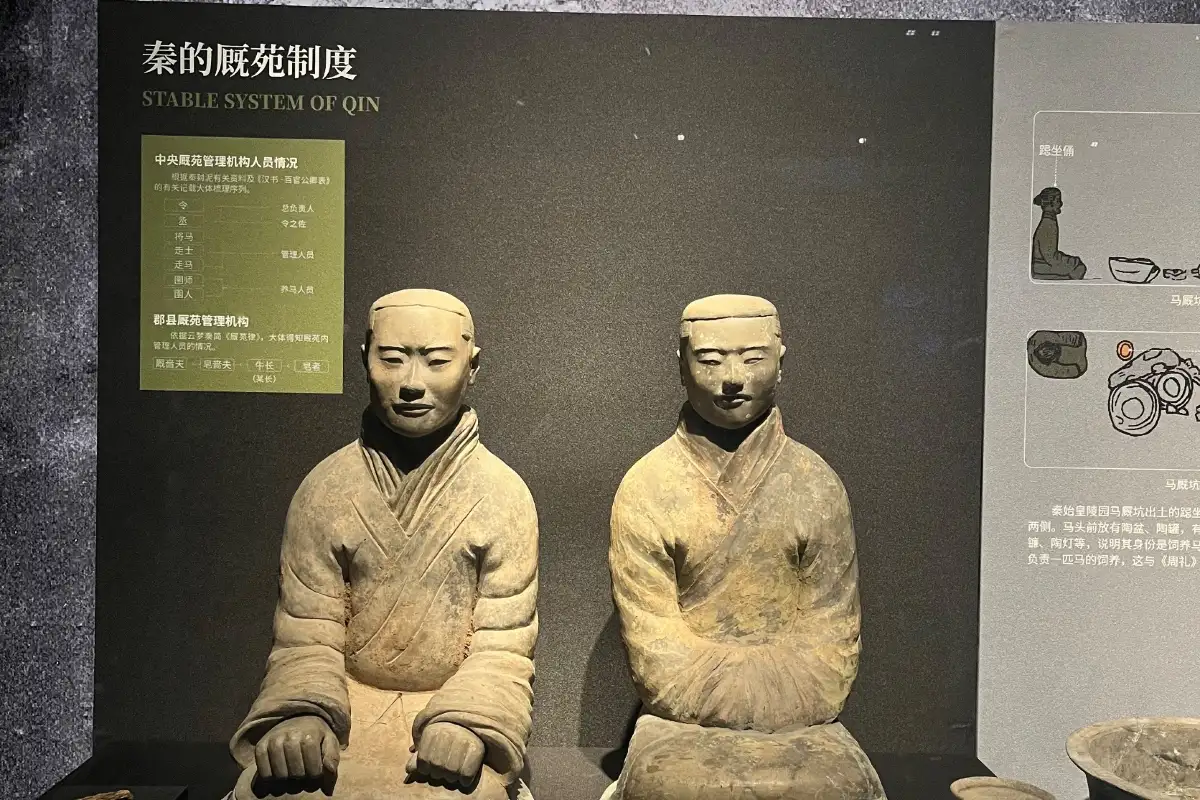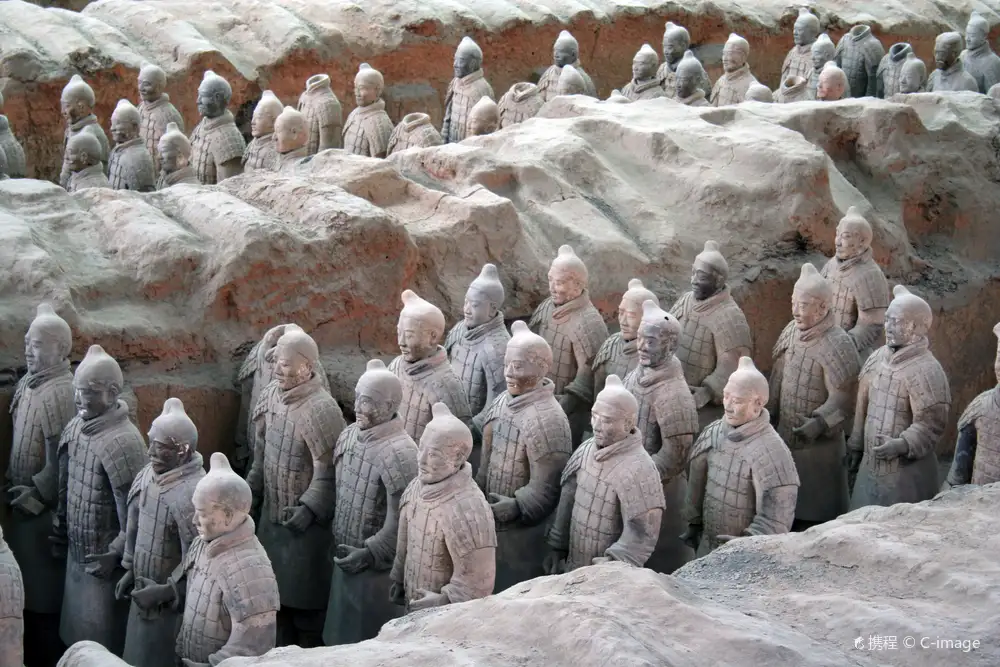












The Xi'an Terracotta Warriors in ranks — banner photo from Pit One, Xi'an

秦始皇兵马俑 · เขตหลินถง, ซีอาน, ส่านซี

นักรบดินเผาซีอาน

นับตั้งแต่ปี 1974 มีการขุดพบทหารขนาดเท่าจริงมากกว่าพันคน และไม่มีใบหน้าเดียวที่เหมือนกัน นักรบทุกคนได้รับการตกแต่งด้วยมือโดยช่างฝีมือของ Qin เมื่อ 2,200 ปีก่อน เพื่อปกป้องหลุมศพของจักรพรรดิองค์แรก ยืนหยัดต่อหน้ากองทัพที่ทำให้โลกเรียกมันว่าสิ่งมหัศจรรย์ที่แปด.

4.7/5 · 149,681 รีวิว Trip.com 4.7/5 · จาก $18.03 · e-ticket บนโทรศัพท์ของคุณ
  • เปิด 08.30 – 19.00 น. · จำหน่ายบัตรถึงเวลา 17.00 น
  • แนะนำ 3-5 ชั่วโมง
  • นักรบ 1,000 คนถูกค้นพบ · ไม่มีสองหน้าเหมือนกัน
  • เขตหลินถง ห่างจากตัวเมืองซีอานไปทางตะวันออก 35 กม
เวลาทำการเปิด 08.30 – 19.00 น. · จำหน่ายบัตรถึง 17.00 น
เวลาแนะนำ3–5 ชั่วโมง · สามหลุมรถรับส่งสุสาน
ที่อยู่เขตหลินถง, ซีอาน, มณฑลส่านซี, จีน
ตั๋วจาก $18.03จองออนไลน์กับ Trip.com →

ยินดีต้อนรับสู่กองทัพฝังศพที่ใหญ่ที่สุดในโลก

กองทัพดินเหนียว พันหน้าที่แตกต่างกัน

นักรบดินเผาซีอาน (秦始皇兵马俑) คือหน่วยพิทักษ์เกียรติยศของหยิง เจิ้ง กษัตริย์เด็กผู้รวมรัฐสงครามทั้ง 6 ของจีนเข้าด้วยกัน และสถาปนาตนเองเป็นจักรพรรดิองค์แรกเมื่อ 221 ปีก่อนคริสตกาล เขาสั่งให้เริ่มฝังศพเมื่ออายุ 13 ปี; ในตอนท้าย คนงานเกือบ 720,000 คนใช้เวลา 38 ปีในการเลี้ยงดูเนินดิน หลุม และกองทัพใต้ดินทั้งหมดนี้.

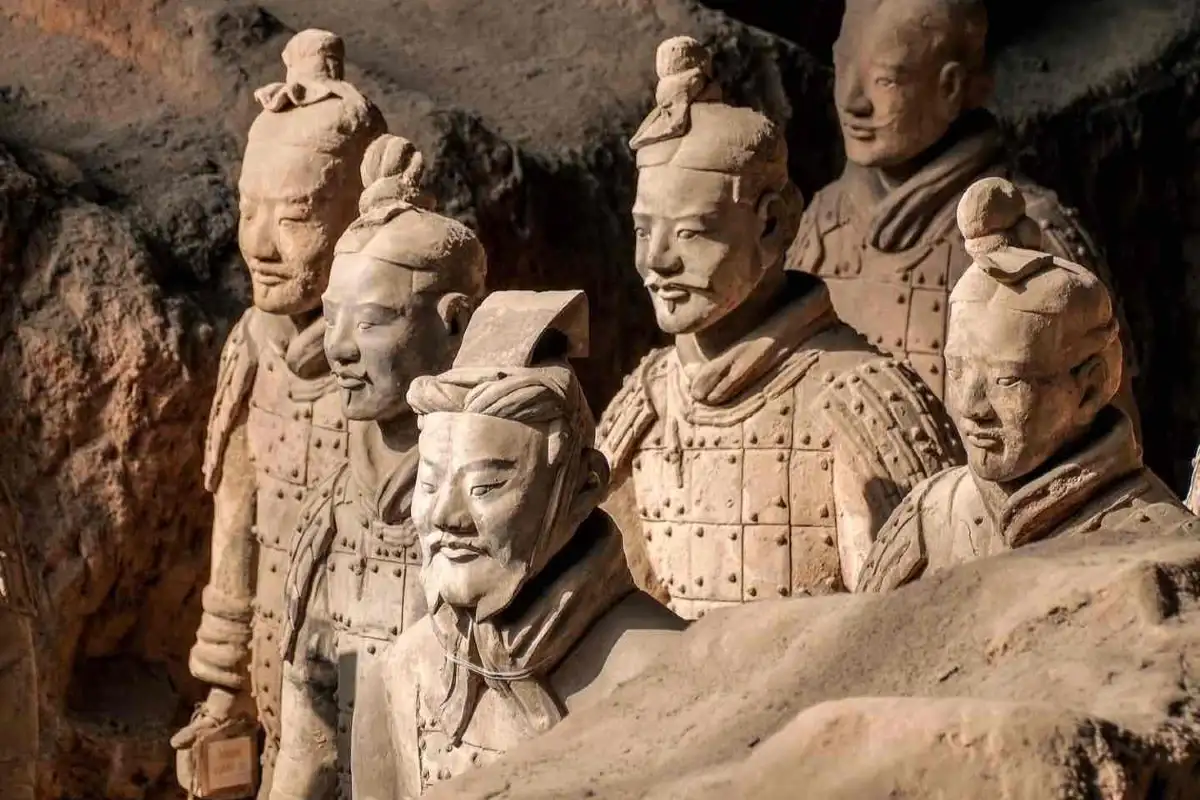
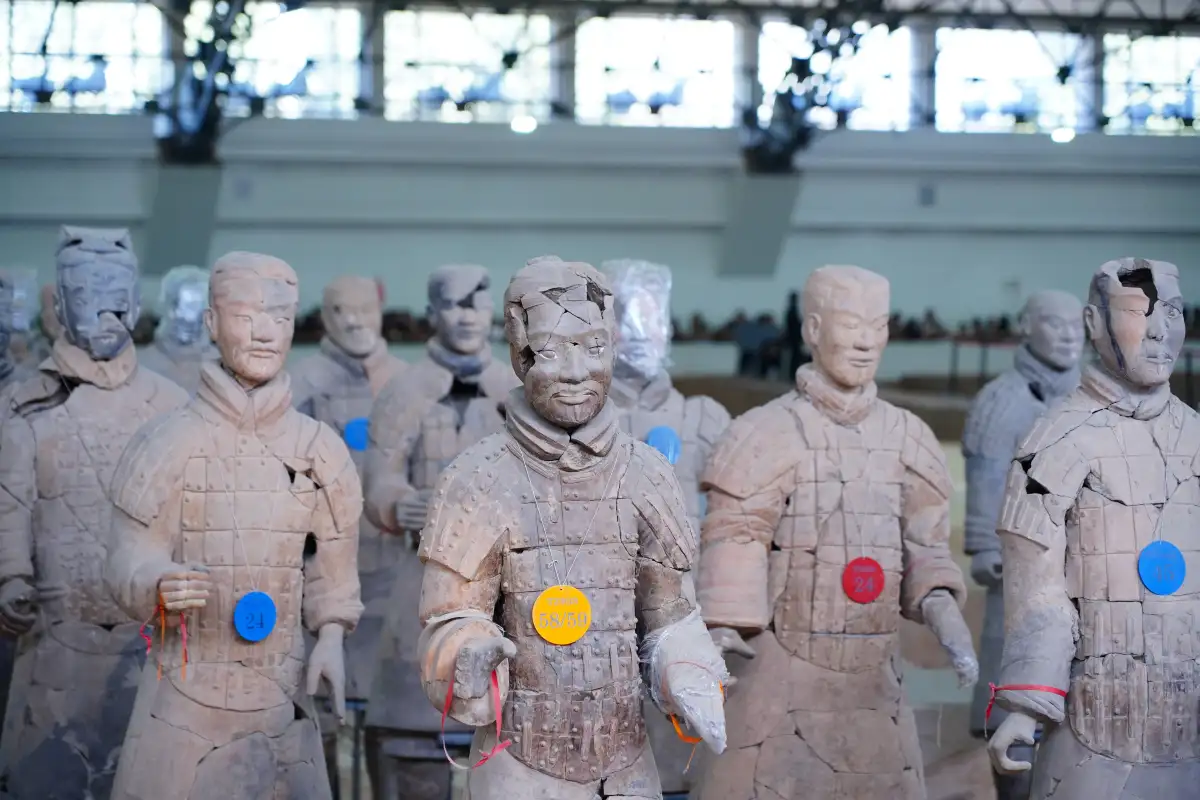
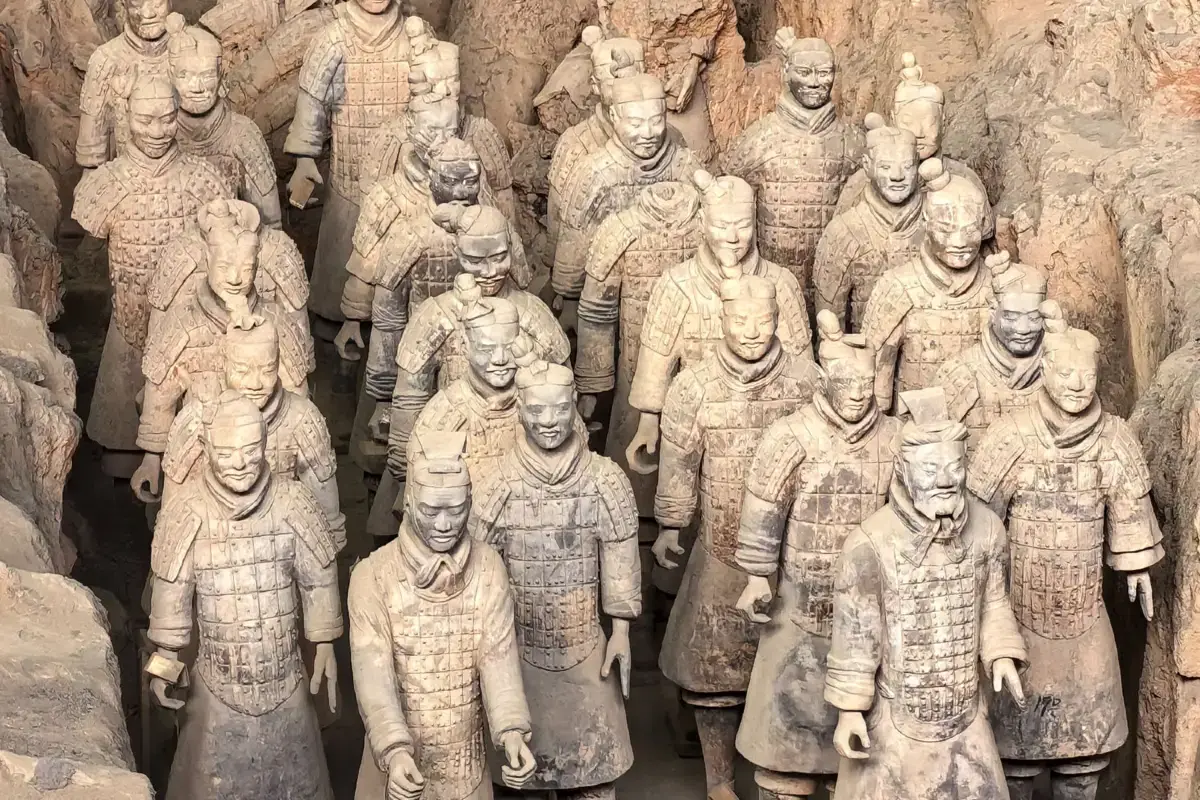
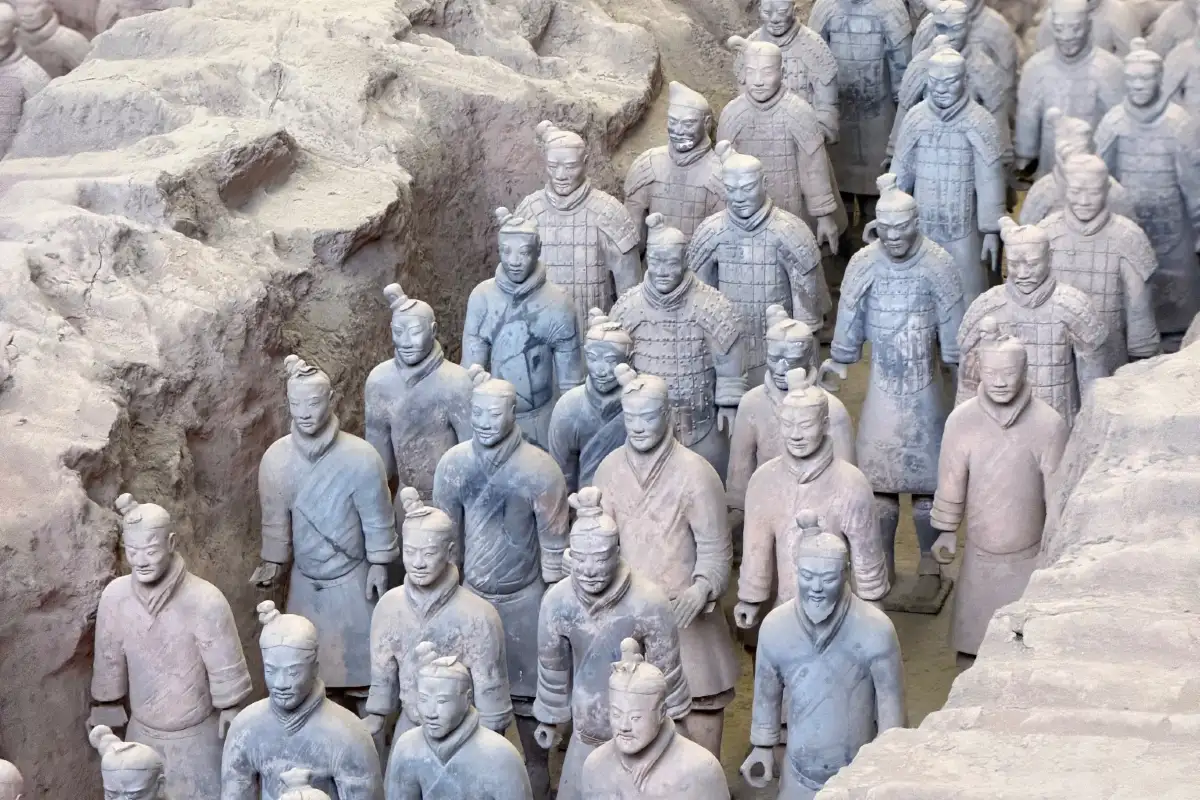
มองดูทหารแถวนั้นอย่างใกล้ชิด ใบหน้าของแต่ละคนแตกต่างกัน นักรบถูกประกอบขึ้นจากเนื้อดินเหนียวแบบโมดูลาร์ จากนั้นจึงทำด้วยมือ — ช่างแกะสลักปั้นรูปทรงต่างๆ ของแต่ละคน หนวดบน หนวด และปมเกราะ และประทับตราชื่อโรงงานของพวกเขาลงในดินเหนียวเพื่อการควบคุมคุณภาพ เมื่อยืนอยู่หน้าแถวหน้าของ Pit One คุณกำลังดูภาพบุคคลของจักรวรรดิ.

  • นักรบขนาดเท่าตัวจริงกว่าพันคนถูกค้นพบ ไม่มีใบหน้าที่เหมือนกันเลย
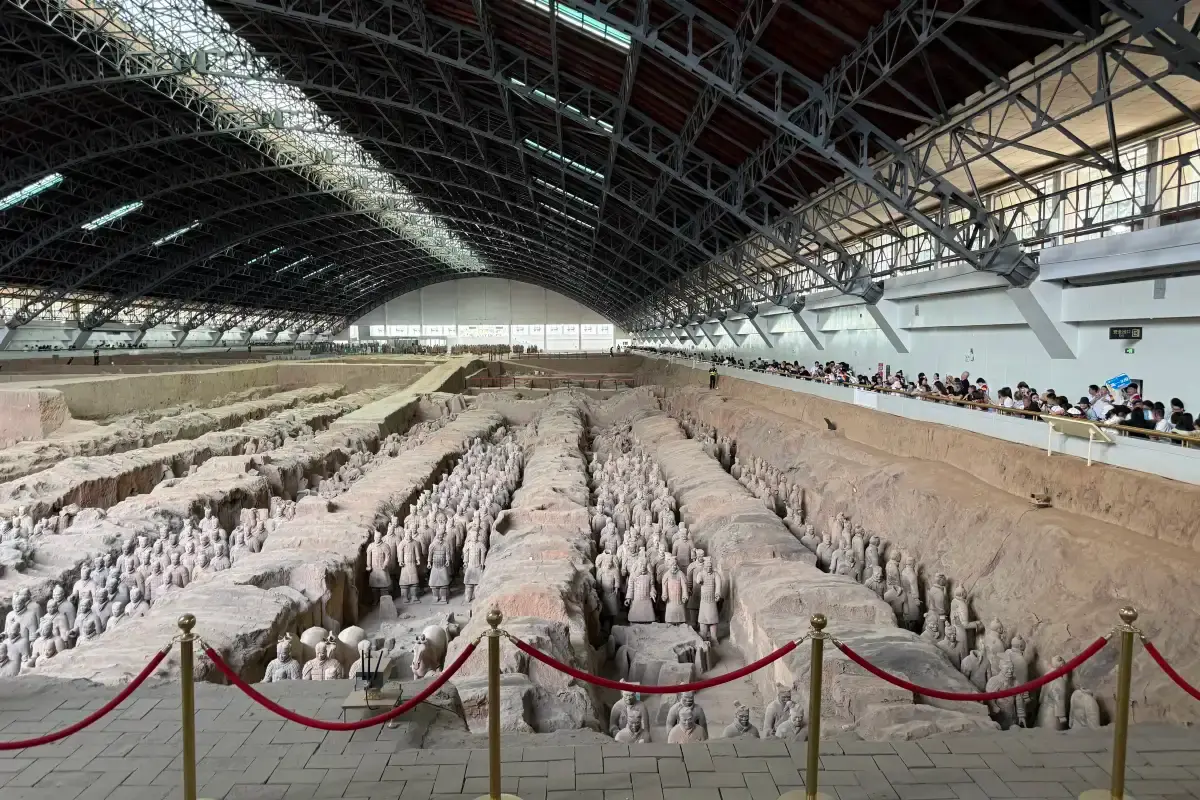
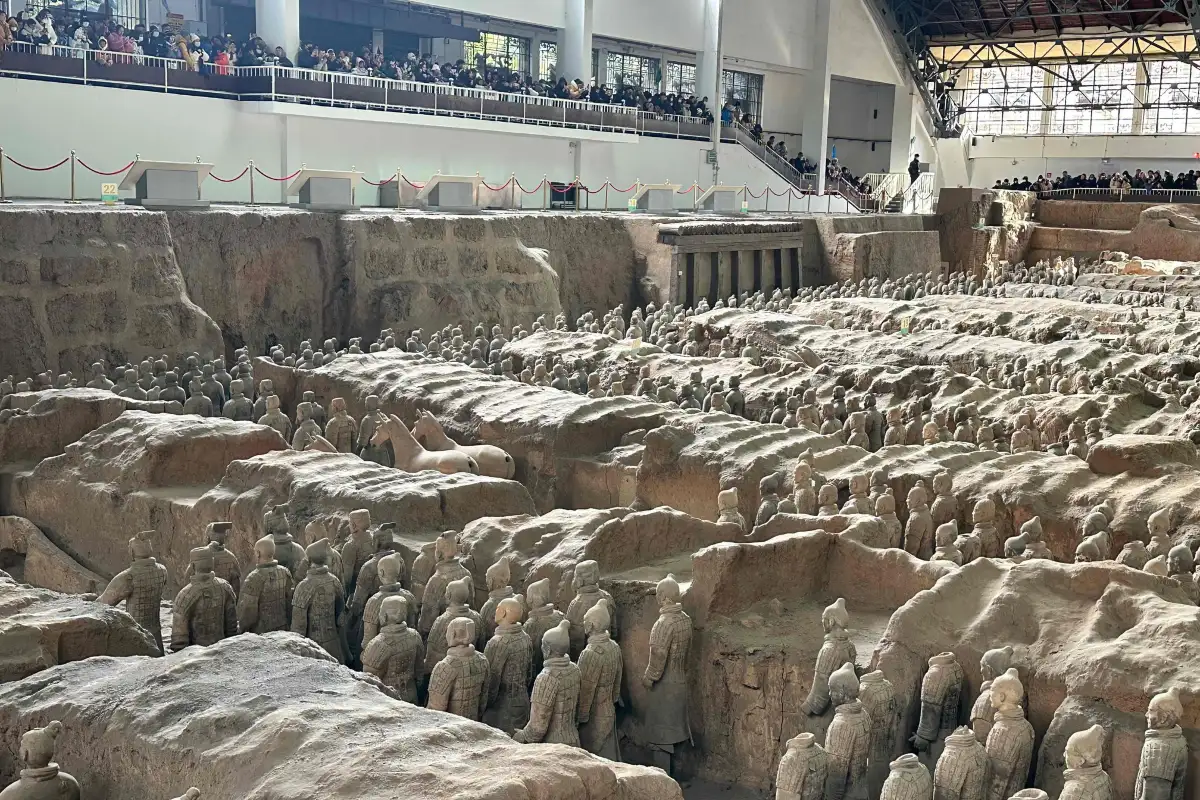
  • หลุมที่หนึ่ง: ทหารราบและม้าประมาณ 6,000 นายในโรงเก็บเครื่องบินโค้งขนาด 230 × 62 ม.
  • เดิมทาด้วยแลคเกอร์สีแดง เขียว ชมพู และ "ม่วงจีน" อันโด่งดัง"
  • ได้คะแนน 4.7/5 โดยนักเดินทาง 149,681 คนจาก Trip.com และ
นักรบ 1,000 คนจนถึงขณะนี้มีการขุดพบ — ไม่มีใบหน้าสองหน้าเหมือนกัน ทุกระดับตกแต่งด้วยมือ

สิ่งจำเป็น

ห้าสถานที่ท่องเที่ยวที่คุณมา

ตั้งแต่กองทหารราบที่ Pit One ไปจนถึงรถม้าสีบรอนซ์อายุสองพันปี สิ่งเหล่านี้คือสถานที่ท่องเที่ยวที่นักเดินทางจะจดจำในปีต่อมา.

01

Pit One - เจ้าภาพทหารราบ

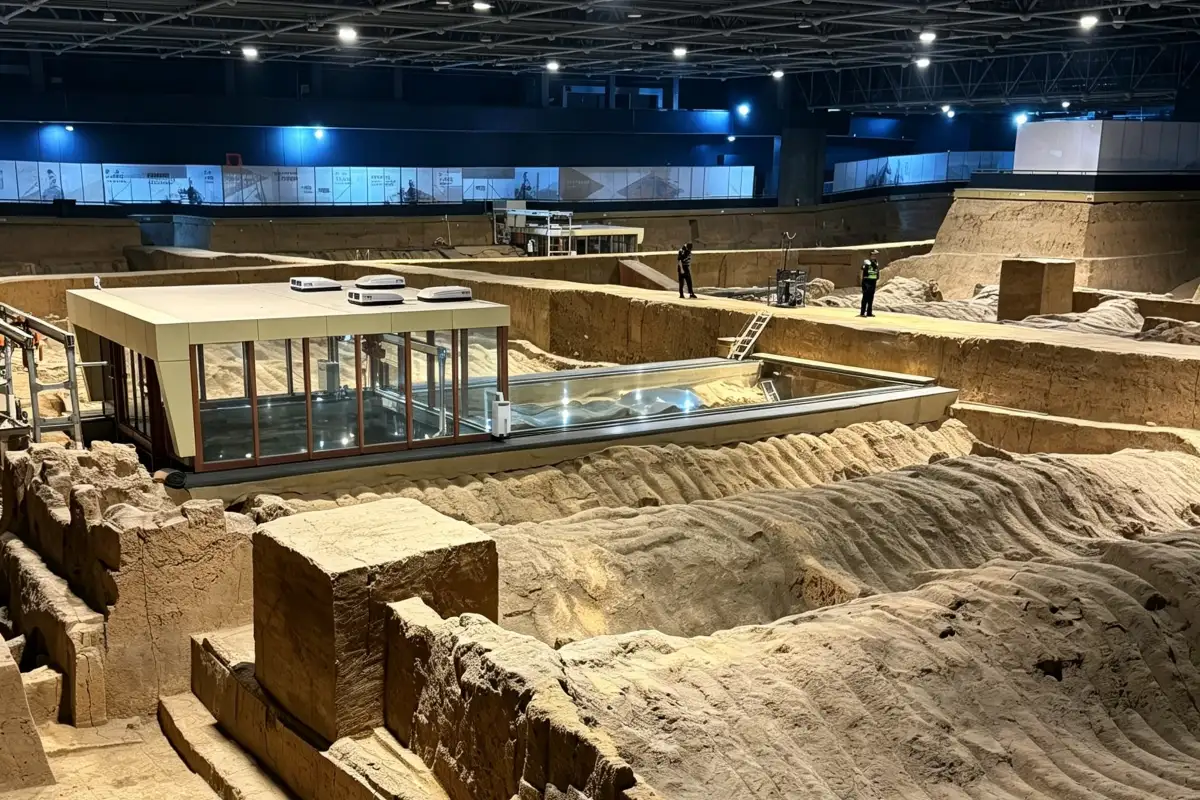
วิวแรกอันโด่งดัง: นักรบและม้าประมาณ 6,000 ตัวในโรงเก็บเครื่องบินที่มีหลังคาโค้งสูง 230 x 62 เมตร กองทหารแนวหน้าหันหน้าไปทางทิศตะวันออก เดินไปตามทางเดินยกสูงรอบๆ โครงสร้าง และดูช่างเทคนิคประกอบชิ้นส่วนที่ขุดขึ้นมาใหม่ในห้องแล็บในสถานที่.
02

หลุมที่สอง – พลังชั้นสูง

การจัดแสดงอาวุธผสม: ทหารม้าพร้อมม้าอาน นักธนูยืนและคุกเข่า และรถม้าศึก - ประมาณ 1,300 ตัว อย่าพลาดชม Kneeling Archer ในกล่องแก้ว แผ่นรองฝ่ามือ และดอกยางที่ยังคงความกรอบหลังจากผ่านไป 2,200 ปี.

03

หลุมที่สาม — ฐานบัญชาการ

หลุมที่เล็กที่สุดและสมองของกองทัพ: เจ้าหน้าที่ในชุดยาว, รถม้าศึกที่มีแผลเป็นอยู่ตรงกลาง และห้องประชุมที่นายพลวางแผนการรณรงค์ หลุมเดียวที่พบไม่บุบสลายแทนที่จะพังทลายลง.

04

ห้องโถงรถม้าสีบรอนซ์

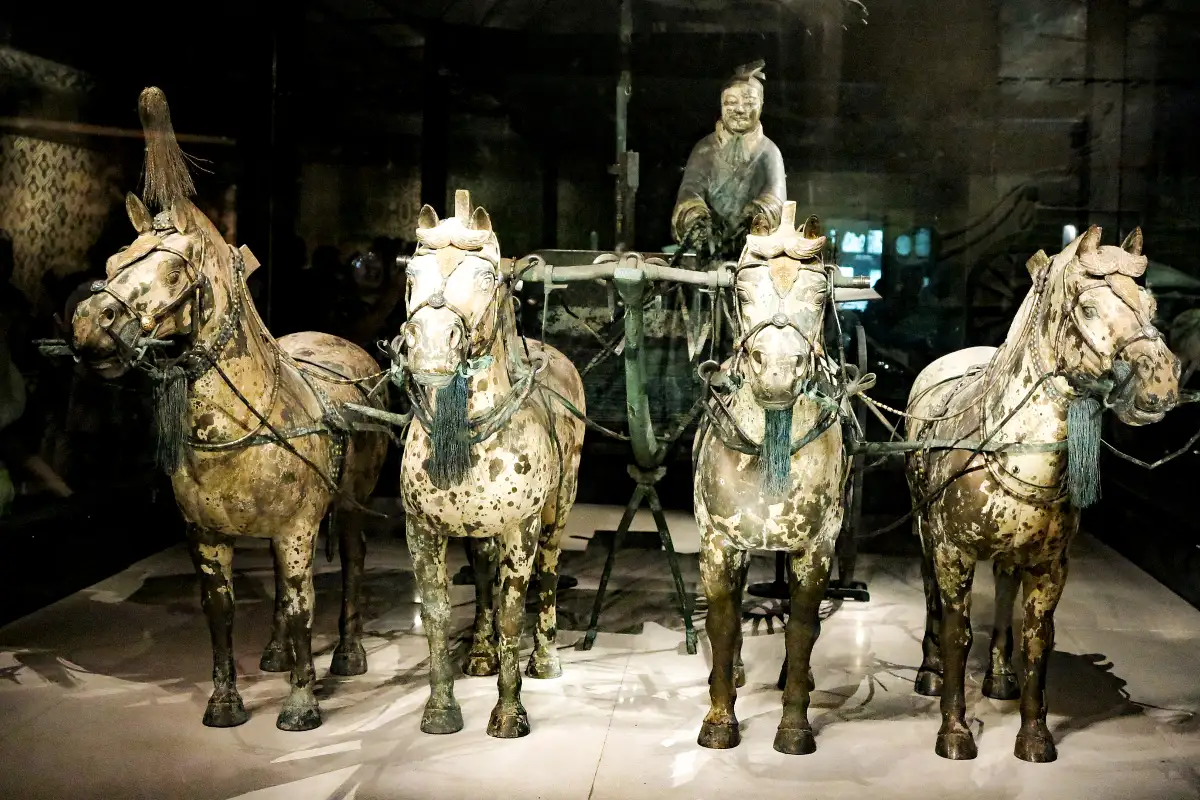
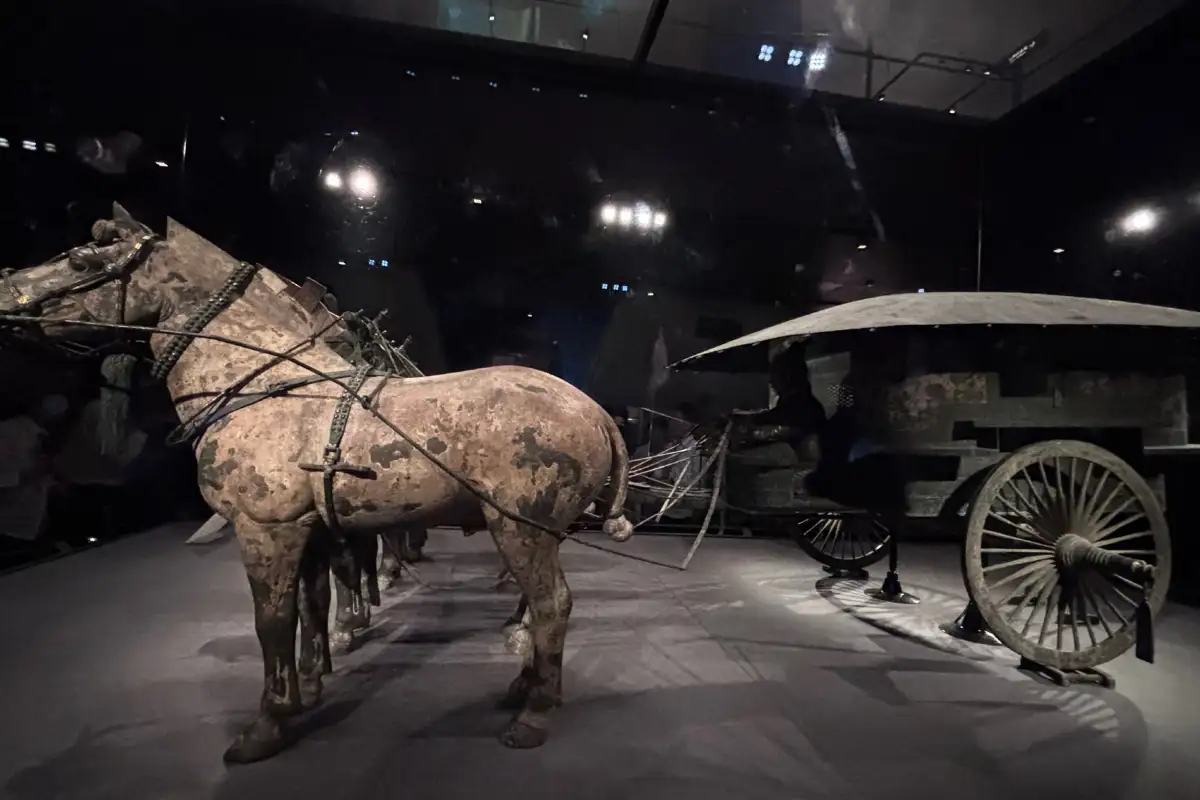
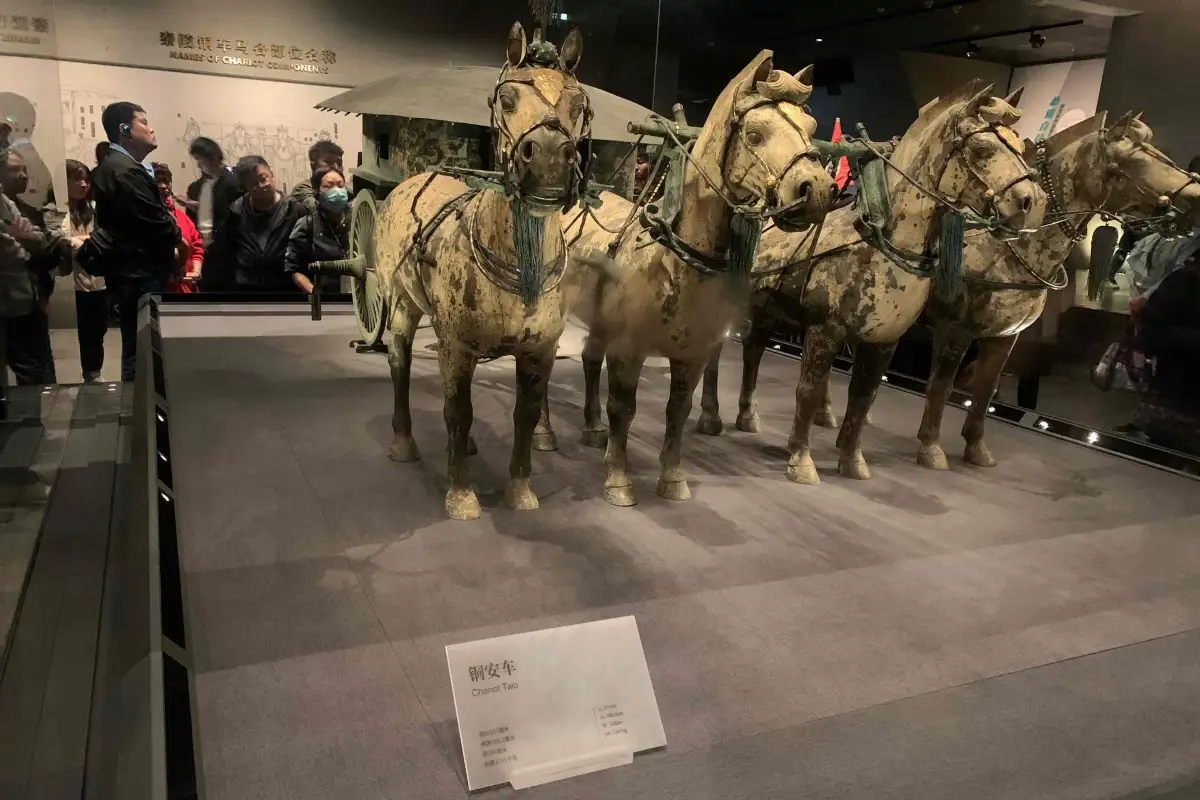
ที่สุสานซึ่งอยู่ห่างจากสุสานไปทางตะวันตก 1.5 กม. (รถรับส่งฟรี) มีการขุดพบทีมรถม้าและม้าสำริดขนาดครึ่งสองทีมในปี พ.ศ. 2523 โดยมีชิ้นส่วนหลายพันชิ้นฝังด้วยเงินและทอง เรียกว่า "มงกุฎแห่งสำริดโบราณ" เนื้อทองแดงหล่อสุดที่เคยพบมาแต่โบราณกาล.

05

เนินสุสาน

องค์จักรพรรดิเองยังคงทรงนอนอยู่ใต้กองปิรามิดที่ปกคลุมไปด้วยหญ้าโดยไม่ได้ขุดขึ้นมา นักประวัติศาสตร์ Sima Qian เขียนถึงแม่น้ำที่มีสารปรอทอยู่ข้างใน และนักวิจัยได้รายงานการอ่านค่าสารปรอทที่ผิดปกติในดินแล้ว ดูจากเส้นทางสุสาน.

ยศของกองทัพ

พบกับเหล่านักรบ จัดอันดับตามอันดับ

กองทัพดินเผาไม่ใช่ประติมากรรมชิ้นเดียวที่ถูกทำซ้ำถึง 8,000 ครั้ง แต่เป็นรายชื่อทหารของราชวงศ์ฉินที่ทำจากดินเหนียว ตั้งแต่นายพลไปจนถึงม้าทหารม้า.

นายพล

ร่างที่สูงที่สุดในหลุม - หมวกสองชั้น เกราะเกล็ดปลา และมือจับเจ้าหน้าที่ผู้บังคับบัญชา พบนายพลเพียงไม่กี่นายเท่านั้น.

ทหารราบติดอาวุธ

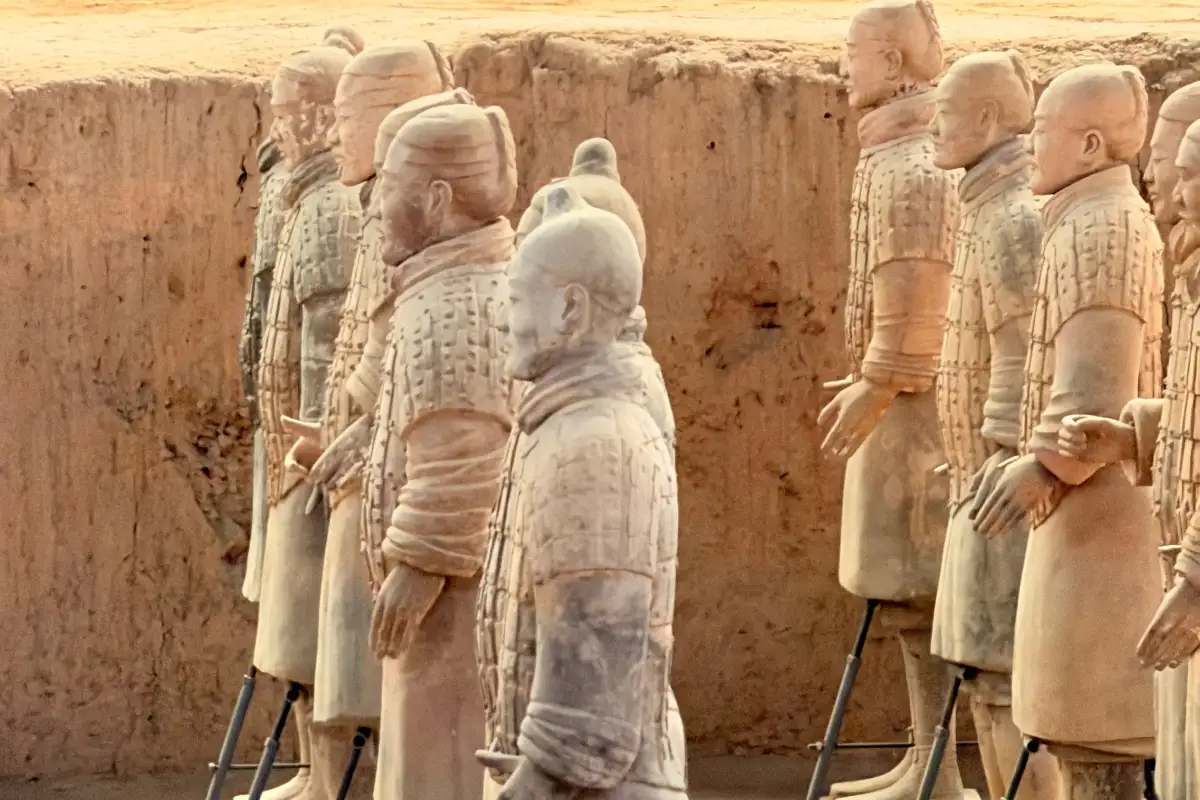
The backbone of the front rank: lamellar armor plates, shin guards and topknots tied on the right side of the head — the regulation of a real Qin soldier.

Standing Archers

Light troops in short gowns, feet at right angles and arms raised to draw a longbow — every archer's hands are frozen mid-action, bows long since rotted away.

The Kneeling Archer

Pit Two's celebrity: half-crouched on one knee, sole treads and palm pads still crisp. Unearthed nearly intact, he is the most photographed warrior of them all.

Light Infantry

Unarmored shock troops in knee-length gowns, captured mid-stride — their heads and hands were made separately, so their expressions are the boldest of all.

Chariots & Charioteers

Each war chariot had a driver with outstretched reins and armored escorts — the chariots themselves were real wood-and-bronze vehicles, now decayed to their metal fittings.

The Cavalry

Saddle-mounted riders beside their short, solid horses — Pit Two holds the cavalry wing, from mounted archers to the scouts who screened the army's flanks.

The Horses

Hundreds of life-size war horses with cropped manes and knotted tails stand beside their riders and chariots — every one modeled on the stocky breeds of the Qin plains.

Every warrior stands between roughly 1.75 and 2 metres tall — the generals the tallest — and each was assembled from modular parts, then finished by hand, so faces, ears, mustaches and expressions all differ. Find your twin among the ranks.

How the army was made

From Clay to Army in Four Steps

The whole force was manufactured beside the tomb by hundreds of state workshops — an assembly line 2,200 years ahead of its time.

1

Local Clay, Coiled Bodies

Workers dug clay near Mount Li, pressed it into thick base slabs and built hollow torsos by hand-coiling — legs were solid, torsos hollow to survive firing.

2

Modular Parts, Stamped Workshops

Heads, arms, hands and armor were produced separately, then attached — heads from eight basic face molds, each personalized afterward. Craftsmen stamped or carved their names on the parts: quality control, Qin style.

3

Fired in Kilns Near the Tomb

The figures were fired in low-oxygen earthen kilns at around 950–1,050 °C — hot enough to turn river clay into ceramic tough enough to stand guard for millennia.

4

Painted in Lacquer & Assembled

Coated in lacquer, then painted in red, green, pink, white and the synthetic "Chinese purple" — finally the army was ranked into formation and buried facing east, toward the states the First Emperor had conquered.

The paint is the great loss of the Terracotta Warriors: the lacquer ground curls and flakes within minutes of excavation, so the army you see today is bare clay — excavation teams now keep new finds moist to save the color.

วางแผนอย่างมืออาชีพ

Six Things to Know Before You Go

Straight from recent warriors-watchers — the details that turn a good visit into a great one.

เวลา

Start at 08:30 — or Linger Late

Tour groups flood the hangars from mid-morning to mid-afternoon. Arrive at the 08:30 opening for quiet paths — or, like one reviewer, enter near the 5:00 PM ticket cutoff and find fewer than 50 people in the pits.

Tickets

Book Ahead, Scan Your Passport

Buy the e-ticket online and simply scan your passport at the gate — one family arriving without a booking found the ticket office sold out, then bought four e-tickets on Trip.com in under a minute.

Route

Pit 1 → Pit 3 → Pit 2

The classic order: the infantry host first, the command post next, the elite force last — then the free shuttle west to the mausoleum mound and the Bronze Chariot Hall. No backtracking at any point.

Comfort

Water, Water, Water

Xi'an summers hit +37°C — "get more water and stay inside," as one traveler put it. The pits are covered hangars; the mausoleum garden is open ground. Bring a bottle, a hat and patience at noon.

Photography

The Pit One Panorama

Shoot first from the central viewing walkway — the full formation in one frame — then drop to the side corridors for close-ups of individual faces. No flash on the warriors and no tripods in the aisles.

Good to know

The Shuttle Is Included

Your ticket covers both sites: the three pits museum and the mausoleum necropolis with its two excavation areas and the Bronze Chariot Hall. A free shuttle connects them — reviewers say the buses run constantly.

The full visit — three pits plus the mausoleum site — takes most travelers 3–5 hours. For anything ticket-related, call the museum at +86-29-81399127 before your visit.

Photo stops

Bring a Full Battery — These Views Deserve It

Infinity rows of clay soldiers, a 2,200-year-old archer and golden bronze — the pits are a photographer's playground.

1

The Pit One Panorama

The classic frame: thousands of warriors in ranks from the raised viewing platform at the hangar's end. Shoot early — tour flags start waving by ten.

2

Front-Rank Close-Ups

The front line soldiers stand closest to the walkway — individual faces, topknots and armor knots sharp enough to count rivets.

3

The Kneeling Archer

Pit Two's glass-case celebrity — half-crouched, hands resting on an imaginary bow. The best-lit portrait opportunity in the museum.

4

Bronze Chariot No. 1

The standing chariot with its 1,172-part umbrella — shot through the display glass with the lights low. Gold and silver inlay still gleams.

5

Pit Three's Command Chariot

The scarred war chariot flanked by officers — moody lighting, few crowds, and the quietest corner of the three pits.

6

The Mound in Morning Mist

The grassy tomb pyramid against Lintong's fields — especially atmospheric after rain or in the soft light before the day trips arrive.

Traveler reviews

What Visitors Say About the Army

Rated 4.7/5 from 149,681 reviews on Trip.com and 4.7/5 from 15,095 reviews on TripAdvisor — here is what real travelers highlight.

I decided to go at 2:30 pm, and it was extremely busy. However, the museums are very large and provide ample history and information.

去之前小伙伴告知是世界第一“坑”,非常坑,就是看人,没意思~然而去了后,觉得很震撼!的确人太多,影响了观感,但是东西真的太了不起了!太震撼了!真的是瑰宝!即使人再多,再看不清,也要去看一下,感受下这绝世无双的历史!

M48***64Review in Chinese ทริป.คอม

he Terracotta Warriors and Horses in Xi'an is the eighth wonder of the world, with a grand scale and magnificent momentum. Thousands of lifelike pottery figurines, with different expressions, seem to have traveled through thousands of years of history, making people feel the glory and power of the Qin Dynasty. It is of great historical and artistic value and is a treasure in the cultural heritage of all mankind, and it is worth seeing by everyone.

this place is a wonderful place to visit. its good to visit the place if u know abt it beforehand. though there are english speaking chinese guides. wiki will give some light abt the place. we went from fast train so from xian north station took a didi like a uber for 110 rmb . the ticket price is 120 and if you have a student card its half the price. the place is large enough to spend around 3 hours . there are three pits 3,2,1.. i started from third pit coz its the smallest one.. and the 2 and then 1 .. the 1 pit is the largest one but the excavation work is still goin on .. there are hundreds of statues.. the hard work is just magnificient.. the pictures which we take are not enough for to capture the feelings which we have when we look at those by naked eyes.. the place is a must to go place though a bit far from city.

Full of history ! Definitely, a must see if visiting Xi’an. This place is massive! like pictures don’t do any justice to how great this place is.

一天内去了兵马俑和华清宫,遇到了非常专业又博学多识的金牌导游张虎导游,虽然天气很炎热,张导还是很耐心地为我们讲解,了解到了很多历史知识,还是不虚此行的(●°u°●) 」

M33***69Review in Chinese ทริป.คอม

Reviews are quoted verbatim in their original language, sourced from Trip.com travelers. Individual experiences may vary.

From the blog

Tips, Guides & Stories

Faces, ranks, weapons and workshop secrets — plus the ticket facts and transport tips that make the visit easy.

Ready to Meet the Warriors?

Tickets from $18.03 — book online with Trip.com, scan your passport at the gate and meet a thousand different faces in one morning.